
What is Pistachio Bleaching?
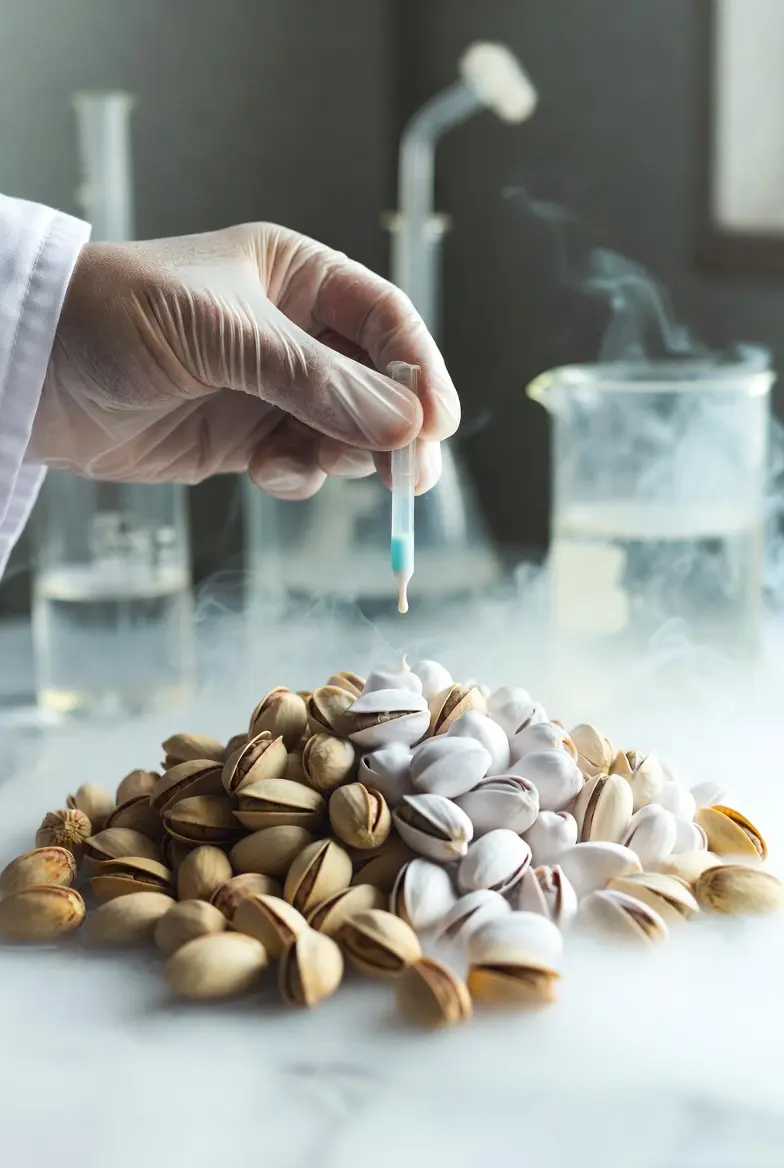
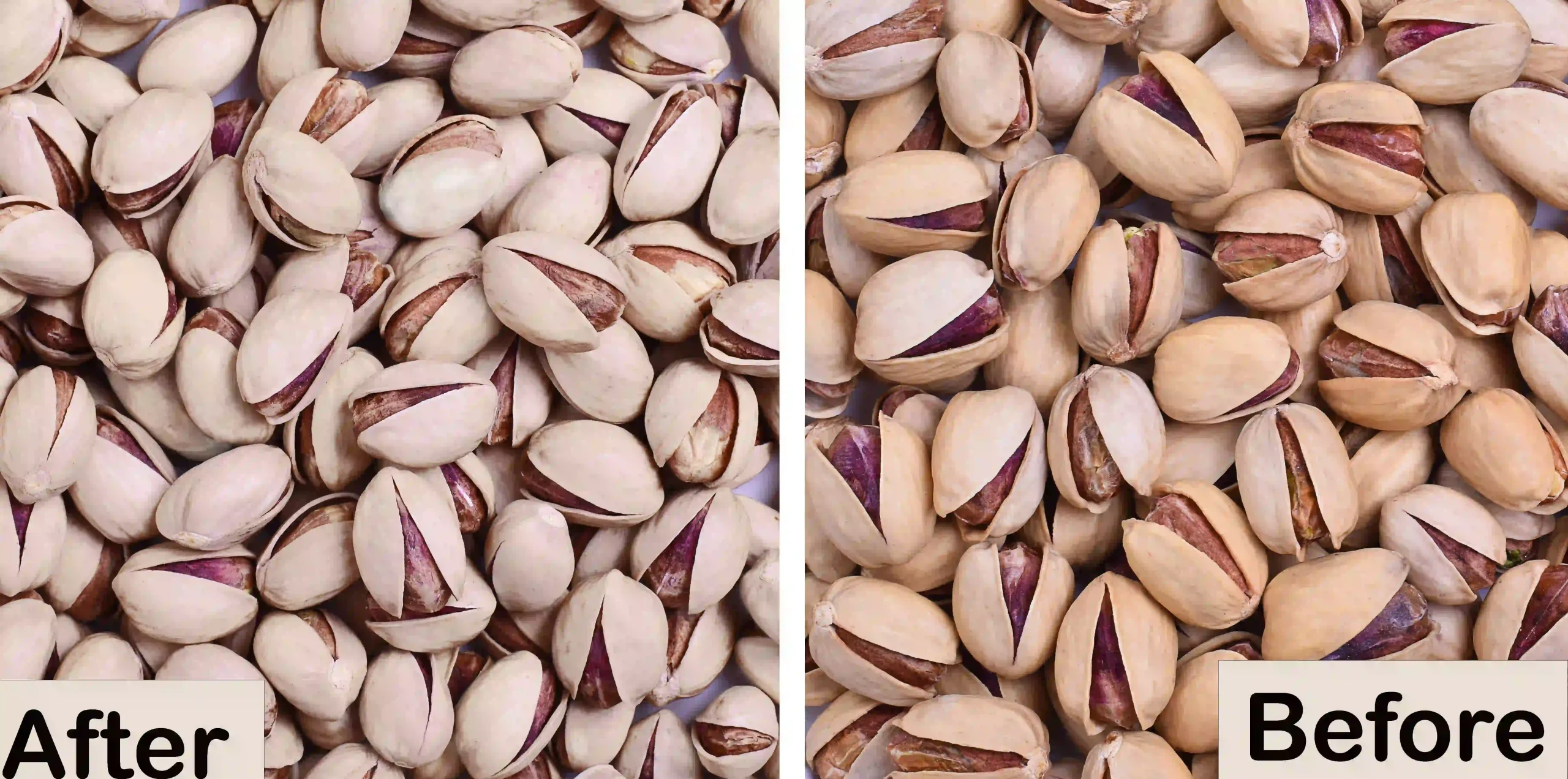
Pistachio bleaching is a post-harvest chemical treatment applied to the in-shell pistachios to alter their natural shell color. The goal is to produce a shell that is uniformly bright, pale beige, or nearly white, eliminating the natural stains, streaks, and color variations that occur during growth and harvesting.
- Natural Shell Color: Untreated pistachio shells range from pale beige to yellowish-brown, often with dark purple, brown, or grayish streaks or blotches. These discolorations are caused by:
Anthocyanin pigments (like those in grape skins) reacting with sunlight.
Tannins leaching from the hull.
Oxidation after the hull is removed.
Field fungi or moisture exposure.
- The Bleaching Process: The nuts are typically submerged in or sprayed with a bleaching solution. Historically, the most common agent was a chlorine-based compound, such as:
Sodium hypochlorite (common household bleach).
Calcium hypochlorite.
Hydrogen peroxide was also used as a less aggressive alternative.
Historical Reasons for Pistachio bleaching
The practice peaked in the mid-to-late 20th century, primarily driven by market psychology and aesthetics:
Health and Safety Concerns
- Chemical Residue: The primary fear was that chlorine-based agents could penetrate microscopic fissures in the shell and contaminate the edible kernel. Chronic exposure to chlorine residues (like chlorates) was a potential health risk.
- Formation of Byproducts: Reactions between chlorine and organic compounds in the shell could potentially form toxic byproducts like trihalomethanes.
Regulatory Action
- U.S. FDA Stance: The U.S. Food and Drug Administration (FDA) never explicitly approved chlorine bleaching for pistachios intended for direct human consumption. They classify it as an unsafe adulteration if it poses a health risk or is deceptive. Major U.S. producers (like the California Pistachio Commission) and industry groups actively discouraged and phased out the practice.
- International Standards: The Codex Alimentarius (international food standards) and regulations in the European Union set strict limits on chemical treatments for nuts. Bleaching with harmful chemicals is prohibited.
Economic Concerns
- Negative Publicity: As consumers became more aware of “chemical treatments,” “natural” and “untreated” became stronger marketing points.
- Potential for Deception: There was concern that bleaching could be used to mask the age of nuts or the quality of the kernel inside.
- Cost vs. Benefit: The additional processing step added cost with diminishing returns as market preferences shifted.
Modern Pistachio Processing
(The Alternative to Bleaching)
Accordingly, today, the global pistachio industry (led by the U.S. and Iran) uses sophisticated, safe methods to ensure quality and safety without bleaching:
- Prompt Hulling & Drying: Nuts are hulled within 24 hours of harvest to prevent hull stains from setting. They are then quickly dried to a safe moisture level to prevent mold (most importantly, aflatoxin).
- Steam Pasteurization: This is now the industry standard for food safety. In-shell pistachios are exposed to moist steam for a specific time to eliminate potential pathogens (like Salmonella). This process can slightly darken the shell, making it even more natural-looking.
- Roasting: For kernel products, dry roasting achieves sterility and flavor.
- Electronic Sorting & Grading: Advanced optical sorters remove defective nuts based on color, size, and internal structure, ensuring quality control without chemicals.
- Natural Appearance Marketing: The industry now educates consumers that natural shell variation is normal and signifies minimal processing. Terms like “natural,” “non-bleached,” and “undyed” are used positively.

